What is NFC?
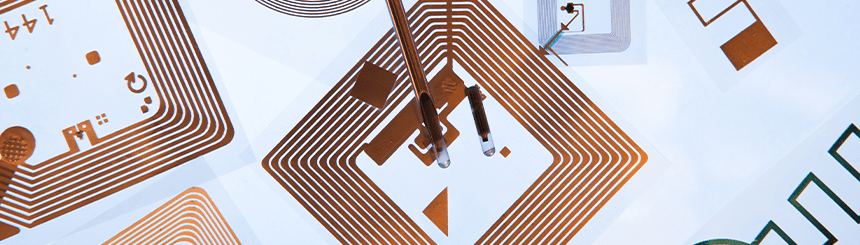
Near Field Communication (NFC) technology stands out as one of the most significant innovations in short-range wireless communications. Evolved from RFID, NFC facilitates two-way communication between electronic devices in close proximity, typically within 10 centimeters of each other. At the heart of this technology are NFC tags, small transmitters that can be embedded into a wide variety of objects, from credit cards to advertising posters, product labels, and beyond.
Unlike RFID, which can operate over various distances and requires a specific reader, NFC is designed for simplicity and security in short-range transactions, playing a significant role in mobile payments where it has gained popularity by enabling fast and secure transactions with a simple "tap" between a mobile device and a payment terminal.
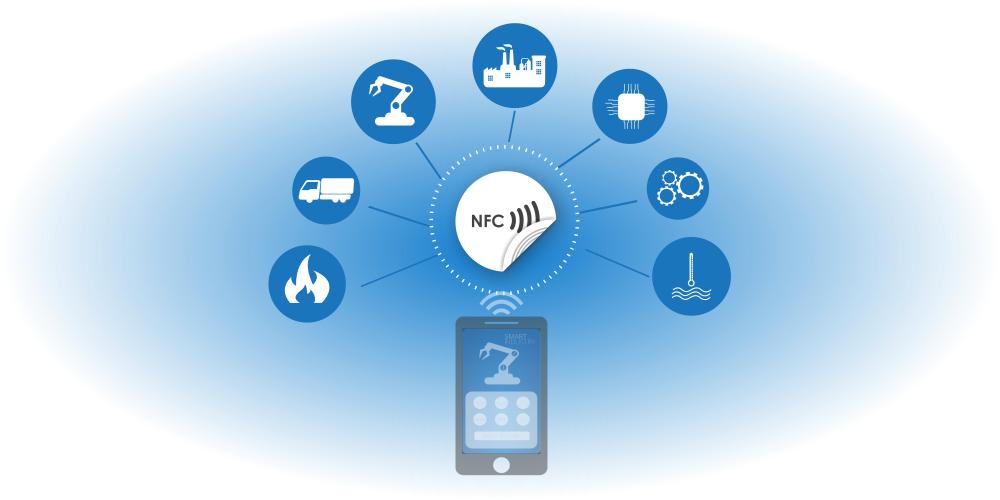
Another key factor contributing to NFC's popularity is its ease of implementation, especially considering that most modern smartphones are equipped with NFC capabilities. This has paved the way for a wide variety of uses, turning mobile devices into versatile tools for interacting with NFC tags in contexts ranging from logistics to healthcare, retail to proximity marketing, facilitating inventory management, product identification, asset tracking, and consumer engagement.
How an NFC Tag Works
The operation of NFC tags is based on sophisticated technology, although the underlying principle is relatively simple. These devices use Proximity Communication, a form of short-range wireless communication.
At the core of NFC technology is a process known as inductive coupling. When an NFC device, such as a smartphone or dedicated NFC reader, approaches an NFC tag, the magnetic field generated by the device induces an electrical current in the tag's circuit. This process "wakes up" the tag, providing it with the necessary energy to transmit the information stored in its chip.
NFC tags, like RFID tags, can be classified into two main categories: active tags and passive tags.

- Passive tags, which represent the majority of NFC tags in use, do not have their own power source and rely entirely on the energy induced by the reader device to operate. This characteristic makes them ideal for applications requiring minimal maintenance and virtually unlimited lifespan, such as product labels, access control badges, and maintenance tags.
- Active tags, on the other hand, are equipped with an internal battery that allows them to operate autonomously and initiate communication with other NFC devices. This capability makes them particularly suitable for advanced applications, such as real-time monitoring in cold chain scenarios, where they can collect and transmit data via integrated sensors, ensuring the quality and safety of transported products.
The programming and use of NFC tags are greatly facilitated by the widespread availability of smartphones equipped with NFC technology. These devices can not only read but also program tags, making NFC accessible to a wide audience. Whether it's launching an app, making a mobile payment, or accessing digital information with a simple tap, NFC tags open up a world of interactive possibilities. Visit our dedicated page to learn how to Program an NFC tag.
In summary, the operation of NFC tags embodies the essence of modern technology: intuitive, immediate, and secure short-range communication. Thanks to their versatility and ease of use, NFC tags continue to find new applications, transforming how we interact with technology in our daily lives.
Programmed NFC tags can be used in a wide range of scenarios, such as automatically launching a website when a phone is tapped on a tag, setting up Wi-Fi networks, checking in on social platforms with a simple touch, or activating profiles or scenarios in smart home environments. The ease and versatility of NFC programming have significantly contributed to the popularity of this technology in areas such as marketing, event management, home security, and much more.
Programming an NFC tag is a simple and accessible process that offers endless possibilities for customizing and enhancing interaction with everyday technology. With a smartphone and an NFC programming app, anyone can leverage the potential of this technology to create innovative and practical solutions.
For detailed instructions on how to program an NFC tag, consult our comprehensive guide.
Practical Applications of NFC
Thanks to its simplicity and versatility, NFC technology has found practical applications across a wide range of sectors, transforming daily interactions and bringing efficiency and innovation. Beyond payments and electronic tickets, some of the most significant and widespread applications of NFC include:
Proximity Marketing
Proximity marketing is a field that benefits from NFC, allowing companies to engage consumers innovatively. Posters, exhibition stands, and products can be equipped with NFC tags that, once scanned with a smartphone, provide additional information, special offers, or redirect to online content.
Inventory Management and Asset Tracking
NFC offers efficient solutions for inventory management and asset tracking in fields such as logistics and retail. NFC tags can be attached to products, components, or equipment to monitor their location, status, and history, simplifying stock management and reducing errors.
Maintenance
In the maintenance sector, NFC offers an effective method for monitoring the status and repair history of machinery and equipment. Technicians can quickly access maintenance data, instructions, or service records simply by bringing an NFC device close to the tag placed on the equipment, simplifying maintenance procedures and improving intervention planning.
Access Control
In access control systems, NFC tags offer a secure and customizable method for managing authorizations. NFC badges can be used to access buildings, offices, or restricted areas, replacing traditional keys or magnetic badges.
Home Automation
In the field of home automation, NFC enables easy interaction with smart home devices. NFC tags can be programmed to trigger specific scenarios, such as turning on lights or adjusting the thermostat, with a simple tap.
Healthcare
NFC technology is also used in healthcare, for example in patient wristbands, which can contain essential medical information and facilitate access to patient data by healthcare staff.
Food and Cold Chain
In the food sector and cold chain logistics, active NFC tags can monitor temperature conditions during transport and storage, ensuring product quality and safety.
This wide range of applications demonstrates NFC's transformative impact, making it an indispensable tool for innovation in various fields, enhancing efficiency, security, and user experience in the digital age.
Explore
To further expand your knowledge about NFC technology and its applications, there are several authoritative online resources offering detailed insights, practical guides, and updates on the latest innovations in this field. Here are two recommended sources:
For those seeking answers to specific questions or needing clarification on particular aspects of NFC, our "NFC FAQ" page is available, featuring a collection of frequently asked questions and answers to help resolve doubts and better understand the potential and limitations of this technology.


 Italiano
 Français
 Español
 Deutsch